About

My blog has quite a lot of posts about Samuel West (Julius Caesar, On Chesil Beach and Darkest Hour) and Charles Edwards (My Fair Lady Australian tour and Henry IX).

Showing posts with label diversity. Show all posts

Saturday, 12 March 2016

National Theatre of Parramatta, The Family Law, more diverse stories, gender swap Shakespeare


Coincidentally, the source for all of the Australian news in this post is from Fairfax #notsponsored.

The National Theatre of Parramatta's 2016 season begins in April with Swallow by Stef Smith. The NToP is a new company based at Riverside Theatres in western Sydney. It seeks to produce work that reflects diversity in Australian society. At the company's launch in November 2015, co-artistic director Annette Shun Wah explained, "What we usually see on Sydney stages does not reflect the nation as it is in terms of its cultural diversity, its socio-economic diversity, or in terms of age, gender or sexuality. We want to change that."
NToP has received support from public and private sources: Arts NSW, Parramatta City Council, Crown Resorts Foundation and the Packer Foundation (via the Sydney Morning Herald)

In February, Benjamin Law wrote about how Australians with an Asian background are rarely seen on TV (his Good Weekend column in the Sydney Morning Herald). He recently adapted his memoir The Family Law for television. Its TV debut had half a million viewers, which makes it one of SBS' highest rating original scripted programs. In addition, the series' first episode received over 1.1 million views when it premiered on Facebook (Media Day).

Actor Miranda Tapsell discussed diversity and identity in a recent Sunday Life interview. Excerpts:
"I'm often asked, 'Where are you from?' As if I'm meant to be from somewhere else, that my dark skin represents some other identity. I'm very proud to be from this country, but I wish more people could take a leaf out of my parents' book because they always saw a more inclusive Australia, where I don't have to explain my identity to anyone because it was embraced from the beginning."
...
"I know there's a hunger for those stories, for more diverse stories. I just feel that more women of colour should be sharing the stage and screen with me." [Tapsell has an Aboriginal background]

**********

David Harewood has suggested that audiences "want to see more diverse stories. It’s not about putting three black people in the back of the shot. It’s about making it normal to see a black actor in a leading role. It still amazes me that Idris Elba is the only black actor in a lead role on British TV." (Radio Times via @actforchangehq)

Scott Ellis and Pippa Nixon have explained how gender can be flexible in Shakespeare productions. Ellis, a director, founded Merely Theatre (The Stage via @actforchangehq). Merely Theatre is currently touring A Midsummer Night's Dream and Henry V in rep. Nixon is playing Ariel in The Tempest at The Globe until 22 April (The Stage via @The_Globe).

Tuesday, 26 January 2016

Diversity: Idris Elba, BAME Shakespeare, Act for Change, #oscarssowhite

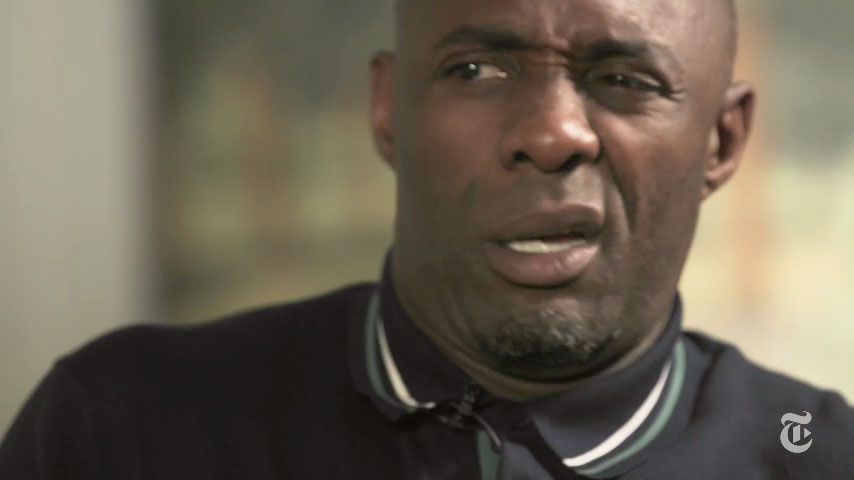
"I read a script, it says, 'Black man, tall. And then it says, leading man.' I'm like, what? What colour's he? Blue?"
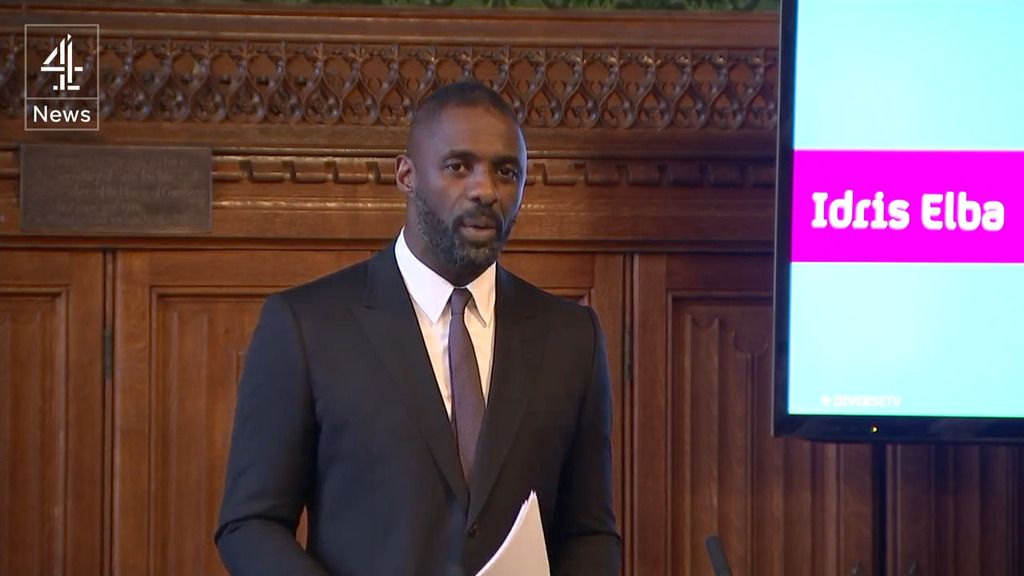
A quote from a New York Times video interview with Idris Elba. This is the accompanying screencap:

Idris spoke to Parliament about diversity in the media, ahead of the Channel 4 diversity conference. The transcript is here and the video is here. His recommendations for improving diversity are:
  1. Incorporating diversity at the beginning of the creative process
  2. Measuring how well broadcasters do diversity
  3. Take more risk with diverse talent

The Independent has an interview with Femi Oguns, who suggests that quotas are a starting point for achieving proportional representation of diversity in the performing arts (via @IGottaBeMeMovie):
"Fourteen per cent of the population is BAME but only five per cent of talent on screen is. The BBC is just ticking boxes. It has an ‘aspiration’ for 15 per cent of BAME screen talent by 2017 – why not just make it happen? Why are black directors in theatre only qualified to direct ‘culturally specific’ works? Theatre is still dominated by white middle-class decision-makers who are qualified not only to tell their life stories but over-qualified to tell yours also."
Oguns is the founder of the Identity School of Acting and the Identity Agency Group.

Samuel West's speech for the UK Disability History Month Conference (November 2015) is available on Youtube. He has suggested, "We look to every producer to be more imaginative. Nobody really knows what the public wants, so don't try to gainsay it. Make the best thing you can and make it as open and diverse as possible." (via @zakfordwilliams).

Act for Change has become a registered charity (their Twitter, @actforchangehq). Donations will fund:


The University of Warwick has launched an online database that documents BAME participation and representation in Shakespeare productions (@BBAShakespeare via a retweet from Act for Change). Although productions have become more multicultural, BAME performers are more likely to be cast in supporting roles such as a witch in Macbeth; Laertes, Ophelia, Horatio, Guildenstern and Rosencrantz in Hamlet; or Hero and Claudio in Much Ado About Nothing.

Excerpt from a New York Times discussion about #oscarssowhite:
A.O. Scott: Spike Lee will get his lifetime achievement award. Chris Rock will be the host. Many of the presenters will be minorities. Integrally close to none of the winners will be. There will be awkward remarks and uncomfortable smiles. The intensity of the discomfort might be a hopeful sign.

In relation to Idris Elba's recent speech about diversity and #oscarssowhite, an article in the Sydney Morning Herald ("White wash" in the print edition, "Oz so white?" in the online edition) suggests that Australian performing arts is not representative of the community. The federal government and broadcasters have supported Indigenous and gender equity programs, however more needs to be done to represent cultural diversity.
Producer Darren Dale: "When you walk down the street, our community is so diverse, and I don't think you can see that on Australian drama at all... there's a healthy expectation that you should see yourself [represented] on screen."
Bali Padda (co-chair, MEAA diversity committee): "If we don't have a diverse range of people creating stories – writers, producers and directors – then the characters written for the Indian or Middle Eastern or whatever becomes a bit tokenistic. And that's not representative either... My personal measure of success is that we won't need to have these kinds of conversations again [emphasis added]."

Monday, 4 January 2016

Diversity: I Gotta Be Me, Noma Dumezweni, ACE funding, film criticism


I Gotta Be Me is a 'real' documentary about Paul Shah, an actor playing Sammy Davis Jr in a tribute show. Phaldut Sharma plays Shah and is a co-creator for this web series. Click here for his thoughts on major themes in the series - diversity and identity.
Episodes 1-3 are now available; new episodes will be released in February (I found out about this web series because they mentioned me on Twitter).

Noma Dumezweni has been profiled in this article in the Independent about British immigrant contributions to the arts, science, food, fashion and sport (via her Twitter, @MissDumezweni). She stars in Linda at the Royal Court, which closes this Saturday. Her next project is her directorial debut - I See You, also at the Royal Court.

Malcolm Sinclair (president of Equity) spoke about increasing BME representation on screen and stage at the WhatsOnStage Awards nominations launch in December (The Stage via Act for Change's Twitter, @actforchangehq):
"All parts should now be available, rather than just the ones that are designated ‘ethnic’ parts... you have to call the people that actually make the decisions to account, which is the producers and directors."

Last month, Arts Council England released a report about diversity relating to workforce, programming, audiences and funding (via The Stage). It is based on data from 2012-2015. Its publication coincided with the announcement of four funding programs to lift BAME (black and minority ethnic) and disabled investment and development:
  • Change Makers - a leadership program
  • Unlimited - a single grant of £1.8 million will be made to an organisation to develop a range of new work by Deaf and disabled artists
  • Sustained Theatre - this is for emerging and established practitioners to increase BAME representation across the theatre sector
  • Elevate - this is for diverse-led organisations outside of the Council’s National Portfolio


The Atlantic has an article about the gender imbalance in film criticism (via Lucy Prebble's Twitter, @lucyprebblish). For example, in four US film critics' assocations, women make up less than a quarter of members. The article suggests that the recent drop in film criticism by women is related to the rise of digital.

Sunday, 29 November 2015

A selection of recent articles about cultural, socioeconomic and gender diversity

... in the entertainment industries in the US, the UK and Australia.

In the New York Times, Aziz Ansari has written about the disproportionate representation of characters with a range of ethnicities:
"whatever progress toward diversity we are making, the percentage of minorities playing lead roles is still painfully low... at a time when minorities account for almost 40 percent of the American population, when Hollywood wants an “everyman,” what it really wants is a straight white guy. But a straight white guy is not every man."
Click here to read his article in full (via Act for Change's Twitter, @actforchangehq).

Asian American actors performed some of their dream roles from musical theatre in the Changing the Stats: Asian Americans on Broadway concert (2 November, Symphony Space). Playbill has a compilation of clips from the performance. The concert was co-sponsored by the Actors' Equity Association. Christine Toy Johnson, chair of the Association's Equal Employment Opportunity Committee, said that the "concert of dream roles not traditionally cast with Asian American actors was a true celebration and extension of our tenacity in achieving more and more."

Daniel Wu (Into the Badlands) discusses his career and how Asian characters are represented on screen, in an interview on Slate (via @monkeywonder's retweet). An excerpt:
You didn’t think about trying to come back and make it in Hollywood?
"I knew from growing up that they wouldn’t put my kind of people onscreen. There were no decent roles for Asians, much less Asian males. Even when Jackie Chan broke through over here and people fell in love with him, they weren’t really seeing him as this iconic, superstar actor—they were seeing him as this cute, funny oriental dude who spoke broken English and did acrobatic tricks. As an Asian American male, what they were in love with is everything you hate, you know?"

The Guardian partnered with an academic research team to launch a survey about diversity in the creative industries in the UK (via Samuel West's Twitter, @exitthelemming). The key findings are:
  • At least 75% of people working in the arts have a middle class background, which suggests that it is difficult for people who don't have this financial privilege to break into these industries.
  • White and BAME (black and minority ethnic) arts employees have relatively disparate views on ethnicity. 29% of BAME respondents to the survey believed that ethnicity is very important in getting ahead, compared to 10% of white respondents.
  • On average, women earn 32% less than men
More results have been published on createlondon.org

The Australian Directors Guild has proposed a quota for Screen Australia: to allocate 50% of production funding to projects directed by women. The Guild has called on support from government agencies and the ABC (the Australian Broadcasting Corporation) to support this initiative (the Guild's press release).
Thanks to Maddy, who is co-creator of Those Two Duffers.

Wednesday, 14 October 2015

Inclusion, Tipping the Velvet, Measure for Measure

A selection of things I have read and listened to recently.

In the Guardian, Lyn Gardner has suggested that inclusion in theatre is an objective in relation to diversity initiatives. She has quoted Brigid Larmour, artistic director at Watford Palace, "unless we stop talking about changing theatre and start actively doing something, every single day, about bringing about change, we will never move on" and referenced John Dyer, director of Credibility, "diversity is asking people to the party but inclusion is inviting them to dance" (via @actforchangehq).

Sarah Waters and Laura Wade discussed the stage production of Tipping the Velvet on Front Row. and in the Independent. Wade adapted Waters' novel. It is playing at the Lyric Hammersmith until 24 October then will transfer to the Lyceum in Edinburgh, 28 October-14 November.

Romola Garai participated in a webchat on the Guardian website, partly to publicise Measure for Measure, which closes 14 November at the Young Vic. She commented on tokenism:
"I think there should be quotas. I think if you're fielding primetime television with 70% and 80% of the parts being white men, you should probably rethink that. There's a lot of tokenism in film and television, with a poster with three white guys, one black guy, and a woman, and that's equality, and it's not equality."
and how she approaches auditions:
"Remember you're auditioning them. Acting is a collaboration with the director, and it's only a worthwhile job if the director respects you completely as an equal. Go into every audition knowing that you're an equal and expect to be treated as such. And have fun collaborating."

Monday, 5 October 2015

Creative Industries Federation diversity report

The Creative Industries Federation has released a report about diversity. The report, which was produced in partnership with MOBO, shares views expressed by Act for Change.*

The Federation held a launch for the report at the BFI last Monday. Eliza Easton, the author of the report and CEO John Kampfner spoke at the event, as well as Kanya King (CEO of MOBO), David Oyelowo and Ed Vaizey (Minister of State for Culture, Communications and Creative Industries).
The Guardian has published excerpts from Oyelowo's speech. Other media coverage includes an article by King in the Huffington Post and an interview with King and Kampfner on Front Row (begins at 6:45).

The report focuses on Black, Asian & Minority Ethnic (BAME), women and socioeconomic background as factors contributing to workplace diversity (p. 4). Its principal recommendations are in the following areas (pp. 19, 21, 24, 28):
  • Recruitment. Develop a hiring strategy to attract a wider range of candidates.
  • Content. Produce content that reflects a diverse society. For instance, programming and commissioning works that represent a range of narratives. In terms of personnel, creative industry organisations "should reflect the society that consumes their products." This has an effect on economic outcomes: the report cites research by McKinsey which suggests that companies in the top quartile for ethnicity and gender diversity were more likely to generate at least 15% financial returns above their respective national industry medians (pp. 13-14).
  • Strategy. Conduct an audit to determine the current diversity status of an organisation and take action accordingly. Areas to consider are employment conditions, attitudes and branding. Are there pay gaps when comparing by gender or ethnicity? Do employees require training to recognise conscious and unconscious biases? Does an organisation have diversity as part of its overall vision?

Case studies from organisations such as a production company, communications consultancy and charities show practical applications of these recommendations. What remains to be seen is if other organisations, especially members of the Federation, can also demonstrate a similar commitment to improving and maintaining levels of diversity. Perhaps these outcomes will be addressed in a current partnership - the Federation is working with McKinsey on a project that relates workforce diversity to financial performance (p. 14).

Act for Change is listed in the report's organisational directory (p. 36). Their manifesto intersects with the recommendations in the report: developing a recruiting strategy to obtain a variety of candidates, representing diversity in content and monitoring levels of diversity:
  • Recruitment. "By 2016, to secure a revision to the Ofcom Broadcasting Code requiring production companies to audition at least one BAME actor for every leading role, unless an occupational requirement applies. Where an occupational requirement exists the production company must set out, in the casting breakdown, the legitimate aim it hopes to achieve by limiting the role to one racial group."
  • Content. "By 2016, to ensure an additional Ofcom standards objective requiring the broadcasting regulator to secure “that the content of television and radio programmes reflects the identity, character and cultural diversity of the UK.”"
  • Strategy. "By the end of 2015, to establish an independent body which monitors the diversity levels of those working in TV Drama (both behind and in front of the camera) on an annual basis."

Another common factor between the Federation's report and Act for Change's manifesto is a psychological one. Some individuals in creative organisations will need to recognise biases, whether conscious or unconscious, and adjust their attitudes accordingly. A significant challenge, but an achievable one.


* This is my second post about diversity. I am a newbie to writing about this issue - I previously wrote about Act for Change in August.

Sunday, 23 August 2015

Artists Against TTIP and Act for Change

I decided to put Artists Against TTIP and Act for Change in a blog post because I noticed that there are some people who are associated with both campaigns: David Morrissey, Juliet Stevenson, Samuel West and Ruth Wilson.


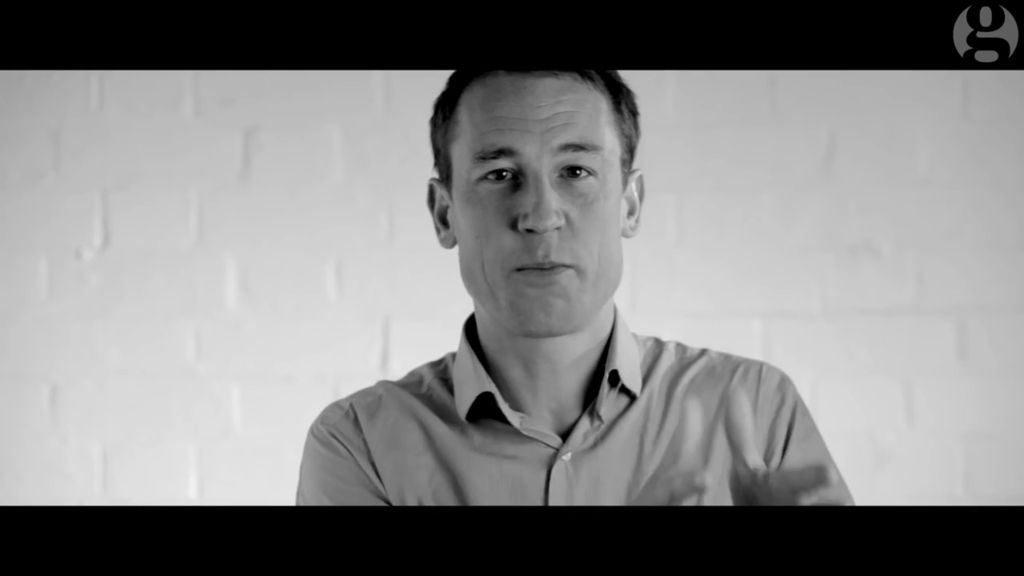
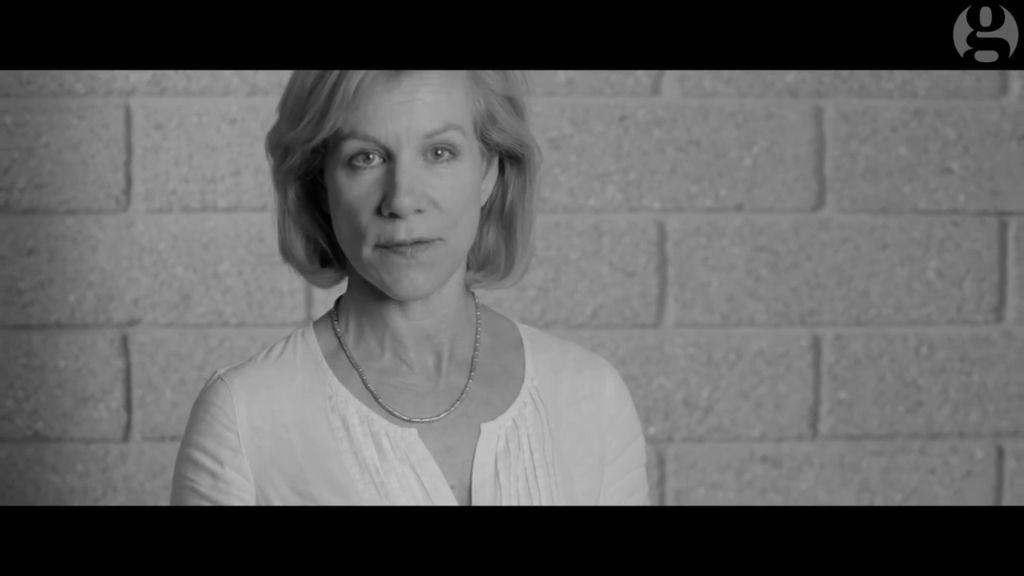
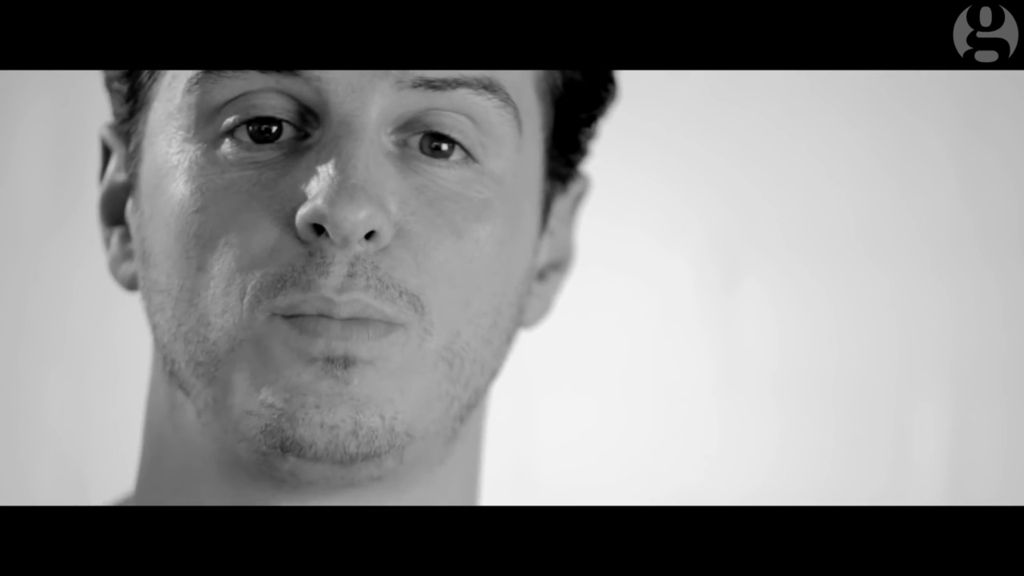
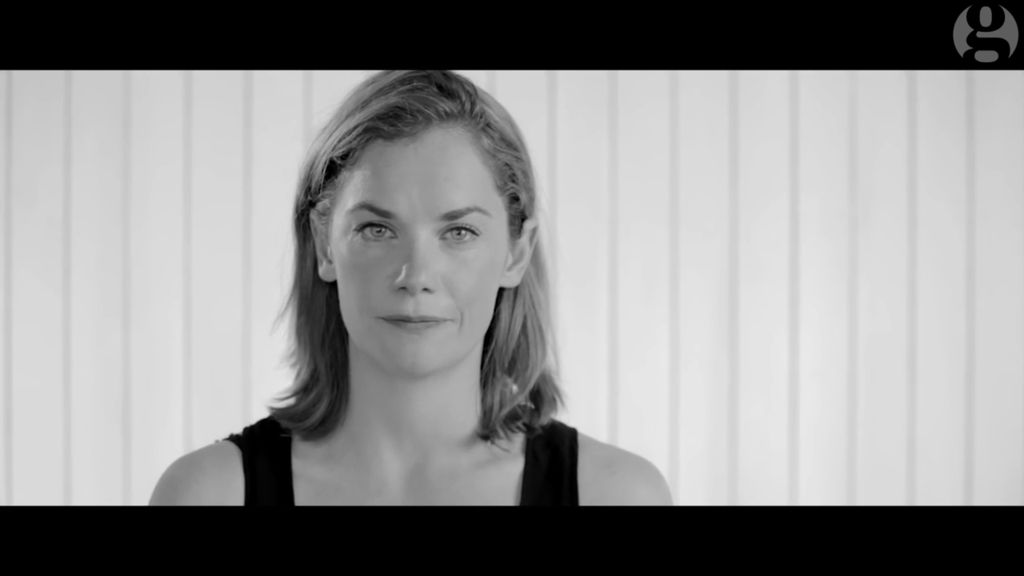
Screencaps of Tobias Menzies, Juliet Stevenson, Andrew Scott and Ruth Wilson from the Artists Against TTIP launch video.

Artists Against TTIP launched in July. TTIP is the Transatlantic Trade and Investment Partnership, a treaty aimed at aligning trade laws between the EU and US. In The Stage, Samuel West commented on cosmetic regulations and Carrie Cracknell suggested possible issues with subsidy and copyright.


Click the pictures above to view a selection of videos on the Act for Change Youtube channel.
(Row 1 - Chipo Chung, Indira Varma, Gemma Chan
Row 2 - Ruth Wilson & Danny Lee Wynter, Juliet Stevenson, David Harewood & David Morrissey)


Danny Lee Wynter established Act for Change in 2014, after seeing an ITV trailer which did not feature a single BAME or disabled artist. The organisation aims to improve diversity in UK performing arts, both in performance and behind the scenes.
In June, Shami Chakrabarti (head of civil rights group Liberty), chaired an Act for Change event at the National Theatre. The event had a variety of panellists: actor Adrian Lester, actor/writer Cush Jumbo, director Phyllida Lloyd, critic Mark Lawson, shadow culture secretary Chris Bryant and artistic director Jenny Sealey (BBC News and Samuel West's Twitter, @exitthelemming). Actors Sophia Sinclair, Ayesha Casely-Hayford and Mitesh Soni shared their thoughts on the debate; all have stressed the importance of improving opportunities for people from diverse backgrounds.